Our Mission and Story
Bower and Sons operates on these four core pillars
Honesty
Integrity
Integrity
Honesty with our clients, sub-contractors, and coworkers.
Integrity
Integrity
Integrity
Integrity to building codes and local municipalities.
Commitment
Communication
Communication
Commitment to a timely delivery of our agreements.
Communication
Communication
Communication
Generous communication with a professional attitude.
WHERE WE BUILD
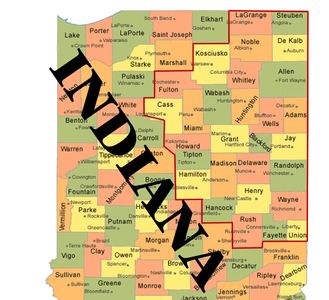
INDIANA COUNTIES
MUST BE WITHIN 2 HR MAX RADIUS FROM BERNE, INDIANA
Adams Allen Blackford Cass De Kalb Delaware Fayette Fulton Grant Hamilton Hancock Henry Howard Huntington Jay Kosciusko LaGrange Madison Marion Miami Noble Randolph Rush Steuben Tipton Union Wabash Wayne Wells Whitley

OHIO COUNTIES
MUST BE WITHIN 2 HR MAX RADIUS FROM BERNE, INDIANA
Allen Auglaize Champaign Darke Defiance Fulton Hancock Hardin Henry Logan Mercer Miami Paulding Putman Shelby Van Wert Williams Wood
How much should I budget and other FAQ's
A "shell" is just what it sounds like, a metal roof, metal walls, and all the roof trusses, posts, and lumber to frame a building. Current pricing as we hit summer 2026 on average for smaller buildings under 2000 square feet will cost approximately $35 per square foot for the shell and concrete floor. Large buildings over 3000 square feet will cost approximately $25 per square foot for the shell and concrete floor. For very large storage or ag buildings without concrete, 8000 square foot and higher, cost can get as low as $18 to $20 per SF. Obviously the building features and options will affect overall cost. Note, these prices don't apply to barndominiums.
That all depends on why you need a new building. We have yet to see the overall cost of a barn decrease after being in business for over seven years. As northeast Indiana gains thousands of new residents every year from around the country the construction industry has been growing with high demand for builders. Those factors indicate that prices will only continue to slowly rise, therefore, clients who waited for a "better deal" have not been something we've seen work favorably in saving money.
Electric is very simple to get into a building. This is added after the building is erected. An electrician will determine the best location to connect power (either from your home breaker panel / or from the nearest transformer) and they will trench a line under ground and connect a new breaker panel inside your new barn. On average, smaller buildings cost between $5,000 to $8,000 for hook up, outlets, and sufficient lighting inside. We work with several electricians and can help walk you through the best options for lighting and your power needs.
As big as you can afford when you build it. This is a repeated statement from people who have built barns over the years. Although it is nice to have a completely finished building, you may want to consider the long-term use of the barn and doing things in stages, starting with the shell and a usable floor, then liner panel, electricity, insulation, etc. Working with hundreds of clients over the years, only one of them as ever said their barn was "too big".
The big names in the barn world have salesmen who get paid commission on selling your barn. Just like other products, you pay for the "name brand" with a large company. Smaller "mom-and-pop" barn builders often shop around for the cheapest metal, lumber, and trusses and purchase from multiple sources to get the best deal. Every company has different expenses for overhead and operations, and it's not uncommon for builders to operate unlicensed and uninsured. We have dealt with hundreds of clients over the years and sadly had to help a few "clean up" problems from unscrupulous contractors. Another key factor in barn pricing are the "ingredients" in your construction. The types of posts, quality of windows, quality in metal, grades of lumber, overhead doors, etc all play into the cost of your barn. Not all barns are built equally and the do-it-yourself kits from big box stores are often engineered to meet minimal code and utilize lower grade materials. A nice barn is a sizable investment to your lifestyle and property. Working with a reputable company ensures they are around in the future when you're ready to expand, or if you need a issue addressed.
If you build with a reputable company that is registered in your state, has some history, and is not "fly by night" then yes. Indiana and Ohio law requires your building be free from reasonable defects pertaining to the construction for two years after completion. Your trusses and some other components will have longer warranties from those individual manufacturers. If you work with a builder who does not have a strong public presence with legitimate reviews you run the risk of them changing addresses, phone numbers, or going out of business. This can happen when people contract with a single builder who offers the "best" price but changes their phone number months later. Some name-brand builders offer a "life-time" warranty and will charge a premium for this piece of mind. Reputable barn builders should state upfront the warranty they offer and provide any documentation needed to verify. There are many great barn building companies in the mid-west and you should be able to ask questions and feel good about who you choose to work with.
The simple answer is: not really. If you want to build a "barndaminium" or a "barn-house" - the question is, Do you want a barn to live in, or do you want a house that looks like a barn? What makes a barn a barn? Barns are usually constructed with metal walls and metal roofs and attached to the ground using poles spaced every 8 feet. Another key difference is roof trusses are pre-engineered and span the whole distance from the outside walls. When building a home in the Mid-West, your building needs to be on top of a solid foundation with concrete and not built with posts in the ground. Any home can use metal siding and a metal roof and build with full-spanning roof trusses. These trusses allow for all interior walls to be non-load-bearing. Therefore, you can easily remove or move walls in the future without affecting the roof. There are definite advantages to building a barn-style home, but in the end, all homes require HVAC, insulation, electricity, plumbing, drywall, paint, flooring, trim work, and utilities.
Contact Us
Bower and Sons LLC
9709 North Clinton Street, Fort Wayne, Indiana 46825, United States
Cookie Policy
This website uses cookies. By continuing to use this site, you accept our use of cookies.